










The Chinese automotive giant, Build Your Dream (BYD), is preparing to expand its presence in the Japanese market by launching a plug-in hybrid vehicle (PHEV).
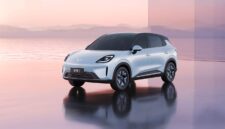
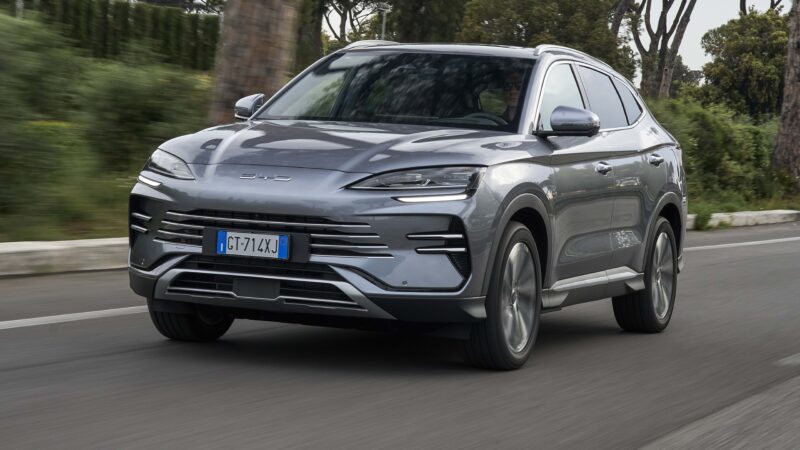
The model being introduced is the BYD Sealion 6. This strategic plan was announced directly by BYD representatives at the Japan Mobility Show in Tokyo in October 2025.
The BYD Sealion 6 PHEV is scheduled to enter the Land of the Rising Sun market in early 2026, specifically in January. This launch marks a bold move by BYD to challenge the dominance of local manufacturers who have long controlled the hybrid and PHEV segments.
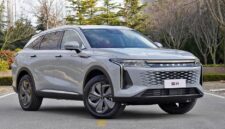
In Japan, the Sealion 6 will directly compete with tough rivals such as the Toyota Harrier and the Mitsubishi Outlander PHEV. These two models are major players and extremely popular in the Japanese domestic market.
Quoting a report from CarNewsChina, BYD is aware that the Sealion 6 may not yet be considered on par with its local competitors in terms of brand image and reputation. However, BYD relies on a proven flagship strategy in the global market: low pricing.
While the price of local Japanese PHEVs generally starts at five million yen—or the equivalent of about Rp399 million—the Sealion 6 is guaranteed to be sold at a much more affordable price. This aggressive pricing strategy is expected to attract cost-sensitive consumers.
Interestingly, on a global level, plug-in hybrid models contribute more to BYD’s total sales than Battery Electric Vehicles (BEV). Data from 2024 clearly shows this fact.
In 2024, BYD recorded total vehicle sales of 4.27 million units. Of this figure, 2.48 million units (58 percent) were PHEV models, while 1.76 million units (41 percent) were BEVs. This PHEV dominance forms a strong foundation for BYD’s strategy in Japan.
BYD has also brought its PHEV lineup to several important international markets, including Europe and Southeast Asia. Some Asian countries visited by BYD’s PHEV models include Thailand, the Philippines, and Singapore. This expansion demonstrates that their PHEV strategy is global and well-planned.
Overall market trends also support this move by BYD. By mid-2025, global PHEV sales had successfully captured 7.6 percent of total car sales.
This figure indicates increasing consumer interest in hybrid technology that offers electric driving range capability.
Looking more specifically, the Chinese market shows a very clear dominance of PHEVs. There, sales in the PHEV segment contribute 15.9 percent of the total market, far ahead of conventional hybrid cars, which only record a 3 percent share.
The Japanese market condition, however, is very different. Conventional hybrid cars still dominate with a 30 percent market share. Conversely, the PHEV segment in Japan has only recorded about 1 percent of sales.
This gap highlights both a challenge and a great opportunity for the BYD Sealion 6. They must change consumer preferences that have long been accustomed to conventional hybrids.
However, projections from the International Energy Agency (IEA) offer optimism. The IEA estimates that by 2030, PHEVs will be able to capture 9 percent of Japan’s passenger vehicle market share.
This 9 percent figure is even close to the penetration of full electric vehicles (BEVs), which the IEA projects to be 10.6 percent during the same period. This projection suggests significant growth in the future.
The IEA report also highlights differences in environmental policies between global regions. Some markets still provide subsidies and attractive incentives for the purchase of PHEV cars.
On the other hand, several other markets are beginning to exclude PHEVs from these subsidy lists. These policy differences naturally greatly influence the pricing and sales strategies that BYD must implement in each country.
With a pricing strategy claimed to be cheaper than local rivals and the support of global market trends leaning toward electrification, the BYD Sealion 6 PHEV is ready to shake up the Japanese car market. BYD hopes this model can become the dark horse that changes the competitive landscape there.