











The automotive industry is once again abuzz with movement from Xiaomi. The Chinese tech giant is predicted to unveil the latest developments in its electric vehicle lineup. The important announcement is expected to be delivered personally by Xiaomi founder, Lei Jun, during his annual speech on September 25, 2026.
All eyes are now focused on one name: the high-performance SUV, the YU7 GT.
This variant has become the center of attention because it is widely rumored to possess extraordinary power capabilities, allegedly capable of producing an output of over 1,000 horsepower (hp).
Information regarding the presence of the YU7 GT emerged after the circulation of several prototype testing photos. Interestingly, the prototype was tested on the legendary Nürburgring Nordschleife circuit in Germany.
The testing on the challenging race track seems to confirm Xiaomi’s focus on high performance. The prototype, caught on camera covered in red and gray camouflage, showed several significant differences from the standard YU7 version.
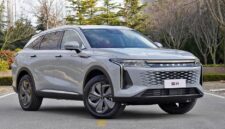
Visually, this YU7 GT prototype appears wider and more aggressive. The front fenders look prominent, while the rear of the car is designed to be more muscular. This design clearly indicates that this is no ordinary electric SUV.
A number of reports circulating among automotive analysts believe that the YU7 GT will feature a tri-motor or three-electric-motor system. This engine configuration is strongly suspected to be identical to the one used in their flagship electric sedan model, the SU7 Ultra.
By adopting the identical tri-motor system, the YU7 GT configuration is claimed to be capable of generating a peak output exceeding 1,000 horsepower.
This fantastic performance figure will immediately place the Xiaomi electric SUV on par with the ranks of the world’s most powerful supercars. This is a strong statement from Xiaomi, despite coming in the form of a Sport Utility Vehicle (SUV).
Some unofficial renderings of the YU7 GT that have circulated on the internet further strengthen the aggressive design speculation. These images show a strong racing ambiance.
Exterior design changes include a large front splitter, which serves to increase aerodynamics. The hood appears to be equipped with ventilation to aid cooling.
The sides are adorned with wheel arches painted black. While at the rear, a large diffuser is seen combined with a solid fixed wing. All these elements emphasize its focus on speed and downforce.
Previously, Xiaomi’s automotive roadmap had reportedly included at least three interesting new models. The three models are the SU7 L, a sedan with a longer wheelbase to increase cabin space.
The second model is the YU7 GT, which is now in the spotlight, positioned as the high-performance SUV variant. The third model is a long-range electric vehicle with the internal code name “Kunlun,” which will most likely focus on maximum efficiency and cruising range.
The high-performance electric SUV segment is indeed experiencing rapid growth and becoming a new battlefield. Various global automotive manufacturers, from luxury brands to tech companies, are fielding their flagship models on test tracks.
In the context of this fierce competition, the presence of the YU7 GT is a very strategic next step for Xiaomi. This 1,000 hp SUV confirms the company’s long-term commitment to becoming a key player in the global electric automotive industry.
Xiaomi’s courage to test its SUV at the Nürburgring is not just a show-off, but also technical validation of their engineering capabilities. The upcoming announcement from Lei Jun in September 2026 will be the deciding factor on whether the YU7 GT is ready to rock the market with supercar performance in a practical SUV package.