











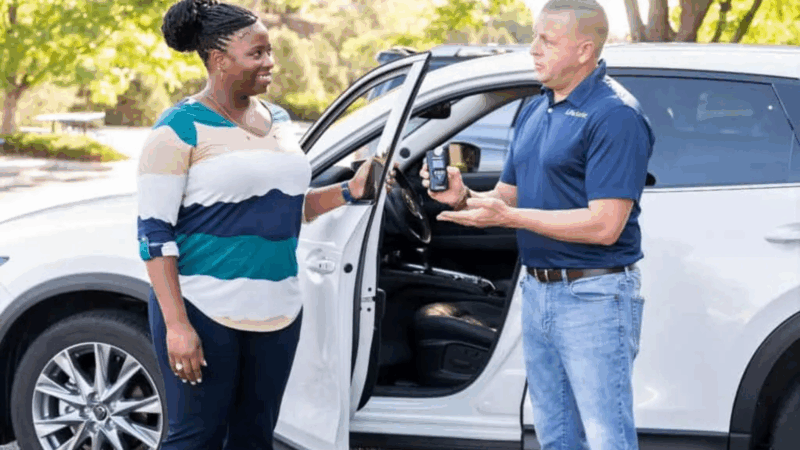
Driving under the influence (DUI) is a serious offense that puts the driver and everyone else on the road at risk. To combat this issue, many jurisdictions mandate the use of a device known as a Car Breathalyzer. This device, officially called an Ignition Interlock Device (IID), is a crucial tool in modern road safety efforts. It’s designed to prevent a vehicle from starting if the driver has consumed alcohol above a pre-set limit.
The fundamental goal of a Car Breathalyzer is straightforward: to separate drinking from driving. By requiring a breath sample before the engine can be started, the device acts as a constant, non-negotiable sobriety check. This technology has proven effective in reducing repeat DUI offenses, thus saving lives.
How Does a Car Breathalyzer (IID) Actually Work?
An Ignition Interlock Device is essentially a miniaturized breath-testing unit wired directly into the vehicle’s ignition system. However, the operation is slightly more complex than just a simple test.
Here’s a step-by-step breakdown of how a typical Car Breathalyzer functions:
- Initial Test: The driver gets into the car and turns the key to the accessory position. The IID prompts the driver to provide a breath sample.
- Sample Analysis: The device contains a fuel cell sensor that chemically analyzes the alcohol content in the breath, measuring it as a Blood Alcohol Concentration (BAC).
- Ignition Decision:
- If the BAC is below the required limit (often 0.02% or lower), the IID allows the electrical current to flow to the starter, and the car can be driven.
- If the BAC is at or above the limit, the ignition remains locked. The driver must wait a short period and try again, perhaps after allowing any mouth-alcohol to dissipate.
- Rolling Retests: This is a critical security feature. Once the vehicle is in motion, the Car Breathalyzer will randomly prompt the driver for a second, third, or subsequent breath sample. This prevents someone sober from blowing into the device just to start the car for an intoxicated person. Furthermore, if the driver fails a rolling retest or ignores the prompt, the IID will log the event and trigger an alarm (such as flashing lights or honking horn) until the vehicle is safely turned off.
Legal Requirem
- Rolling Retests: This is a critical security feature. Once the vehicle is in motion, the Car Breathalyzer will randomly prompt the driver for a second, third, or subsequent breath sample. This prevents someone sober from blowing into the device just to start the car for an intoxicated person. Furthermore, if the driver fails a rolling retest or ignores the prompt, the IID will log the event and trigger an alarm (such as flashing lights or honking horn) until the vehicle is safely turned off.
Ents for Using an IID
In most cases, the installation of a Car Breathalyzer is a mandatory condition imposed by the court for individuals convicted of a DUI offense. These devices are not optional; they are a necessary step for license reinstatement and driving privileges.
The terms of the IID requirement typically include:
- Duration: The period the device must remain installed (e.g., 6 months, 1 year, or longer).
- Calibration and Monitoring: Regular service appointments (usually monthly or bi-monthly) at an authorized service center. The data stored in the IID’s memory is downloaded and reviewed by the monitoring agency.
- Bypassing is Prohibited: Tampering with, bypassing, or attempting to cheat the device results in severe penalties, including extension of the IID period or license revocation.
The technology of the Car Breathalyzer helps authorities monitor compliance effectively. For example, some devices are equipped with a camera to ensure the correct person is providing the breath sample.
Maintenance and Successful Usage
Successfully navigating the IID requirement involves diligence and careful usage. Drivers must learn the proper technique for blowing into the Car Breathalyzer to avoid false positives caused by substances like mouthwash, energy drinks, or certain medications.
Ultimately, the Car Breathalyzer serves as a strong deterrent and a tool for behavior modification. It provides a means for offenders to maintain some mobility while ensuring public safety.
The installation of a high-quality Car Breathalyzer is an investment in personal responsibility and the safety of the community. It is a proven measure that significantly contributes to reducing alcohol-related accidents on our roads.