











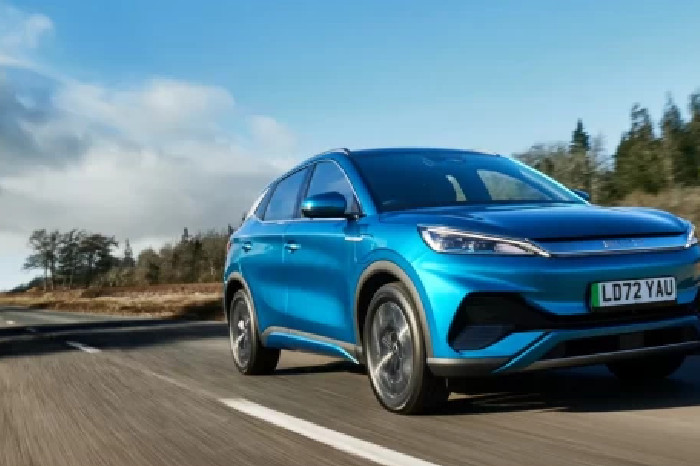
Electric vehicle (EV) manufacturer BYD (Build Your Dreams) has announced its largest recall to date, covering 115,000 vehicles in China following reports of serious safety defects involving motor controllers and battery seal failures.
The recall, confirmed by the State Administration for Market Regulation (SAMR), raises fresh concerns over the long-term reliability of BYD’s vehicles and the company’s low-cost production strategy, which has been a cornerstone of its rapid global expansion.
Affected Models and Identified Defects
The recall impacts two of BYD’s most popular models — both battery-electric and hybrid variants — produced between 2015 and 2022, a seven-year span that suggests a possible systemic quality control issue rather than an isolated production fault.
BYD Tang Series (Hybrid and EV)
-
Units Affected: Approximately 44,500
-
Technical Fault: Defective motor controller components
-
Safety Risk: Corrosion of circuit boards, potentially leading to sudden power loss while driving
BYD Yuan Pro Series (Hybrid and EV)
-
Units Affected: Around 71,200
-
Safety Risk: Improper installation of battery seals could allow water ingress, increasing the risk of short circuits or significant power loss.
Regulators Demand Free Safety Repairs
In an official statement, SAMR instructed BYD to immediately address the issue and carry out repairs at no cost to affected customers.
“BYD Auto Industry Co., Ltd. will authorize its dealers to apply special sealant to reinforce the battery casing, restore water resistance, and eliminate safety risks free of charge,” the regulator said.
The agency also emphasized the importance of stringent post-repair inspections to ensure compliance and prevent future incidents involving EV battery safety.
The scale and duration of the recall have sparked renewed discussion about China’s EV quality standards. The seven-year production window affected (2015–2022) indicates that BYD’s issue may stem from design and material weaknesses rather than temporary manufacturing flaws.
Analysts warn that this recall poses a significant reputational challenge to BYD, whose dominance in the global EV market has been largely built on government subsidies and aggressive pricing against European competitors.
This incident comes amid heightened scrutiny of Chinese EV brands following fatal accidents involving rival manufacturers. Earlier this year, Xiaomi’s SU7 faced public criticism after a crash that killed three people, intensifying debates about EV safety engineering in China.
It’s worth noting that safety issues are not exclusive to Chinese EV makers. U.S. automaker Tesla has also faced multiple investigations worldwide over potential door handle design risks, which rely entirely on sensors and electric systems.
Critics argue that such electronic mechanisms could malfunction during power outages or fires, potentially trapping passengers a design concept reportedly replicated by some Chinese brands, including Xiaomi.
In response, Chinese regulators are reportedly drafting new safety standards mandating that all passenger vehicles include manual door-release mechanisms accessible from both inside and outside the car, enhancing emergency safety for EV users.
The recall of 115,000 vehicles represents more than just a technical setback — it’s a critical test of BYD’s ability to maintain quality control as it expands internationally.
While BYD continues to lead China’s EV market in sales volume, the incident underscores the growing need for rigorous safety compliance and international-quality manufacturing as the brand seeks to strengthen its foothold in Europe and other global markets.